The way fashion produces its imagery is changing faster than many industry players had anticipated. The costs of traditional photoshoots keep rising, production timelines are stretching longer and the demand for visual content in e-commerce shows no signs of slowing down.
Against this backdrop, an Austrian startup has built a platform that proposes an entirely different model: generating and editing professional fashion images through artificial intelligence, eliminating much of the traditional production chain.
What PiktID Is and How It Works
PiktID is an AI-powered image editing and generation platform designed specifically for the fashion and retail sector. Founded in Austria and led by CEO DavideRighini, the company serves brands, retailers and e-commerce operators who need to produce professional visual content at scale without relying on a full photoshoot setup every time.
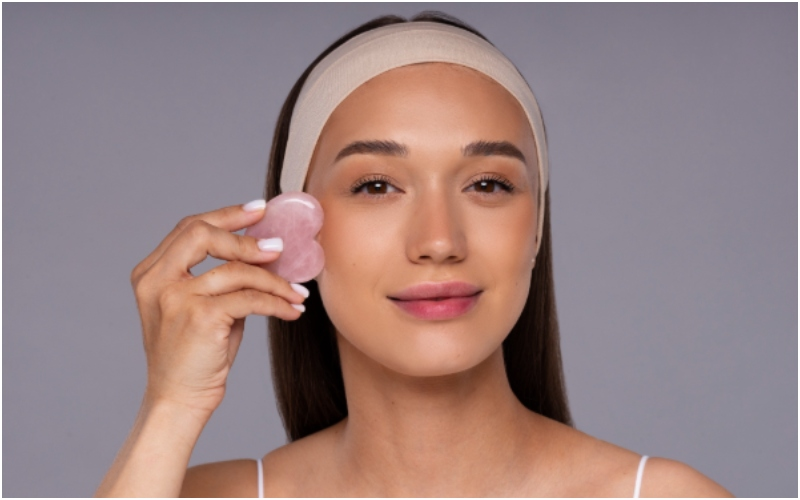
The process is simpler than one might expect. A user uploads a product image, say a garment worn by a model, and the platform allows them to modify the face, ethnicity, background and expression, or generate entirely new variants ready for publication. The result is a professional-quality image, produced in minutes and directly usable on product pages of an online store or in an advertising campaign.
This is not a simple photo editor. PiktID runs on deep learning models trained for the fashion context, meaning the generated images respect the proportions, lighting and visual style the industry demands.
Why Traditional Fashion Photoshoots Are Losing Ground
For decades, the photoshoot was the beating heart of visual production in fashion. Today, that model is showing increasingly visible cracks. A single photoshoot for an e-commerce catalogue can take weeks of planning: model selection, studio hire, coordination of photographers and stylists, shooting sessions and then the entire post-production workflow.
Costs accumulate quickly. Industry estimates suggest a single day of professional shooting can exceed several thousand pounds, before factoring in post-production expenses and model image rights. For a brand that needs to refresh its catalogue every season, or multiple times per season in the case of fast fashion, these figures become a structural barrier.
Then there is the scalability problem. A retailer selling across ten different markets needs visual variants that reflect the diversity of its audience. With the traditional model, this means multiplying shooting sessions. With artificial intelligence, it means pressing a button.
Key Features That Make PiktID Stand Out in Fashion
What sets PiktID apart in the landscape of AI tools for fashion is the specificity of its approach. The platform is not a generic image generator: every feature has been designed around the concrete needs of those producing visual content for fashion retail.
Virtual model generation allows the creation of realistic figures with customisable characteristics, including face, ethnicity and expression, starting from an existing product image. This removes the need to hire different models for different markets. Background editing makes it possible to place the same garment in various visual settings without additional shoots. The image resolution enhancement brings visuals up to the quality standards demanded by e-commerce platforms, even when the source material is less than optimal.
Every feature addresses a specific problem: reducing the steps between the physical product and its digital representation ready for sale.
How Fashion Brands Are Using PiktID Today
The adoption of tools like PiktID is following different trajectories depending on brand size and objectives. E-commerce retailers with large catalogues, spanning hundreds or thousands of product lines, use the platform to generate product page imagery, creating multiple variants from a single original shot. Where ten photoshoot sessions were once needed, today one is enough.
Brands selling across international markets leverage model customisation to adapt visual content to different audiences. A catalogue aimed at the Northern European market can feature different models compared to one targeting Southeast Asia, with no significant additional cost.
Applications extend to social media marketing as well, where production speed is a decisive competitive advantage. Creating visual content for an Instagram campaign or a new collection launch becomes a process measured in hours, not weeks.
PiktID vs Traditional Photoshoots: Cost and Time Comparison
The economic comparison between the traditional model and the AI-based approach is perhaps the most compelling argument for business decision-makers. PiktID reports a cost reduction of up to 90% compared to a conventional photoshoot, a figure that becomes entirely plausible when you break down the individual expense lines eliminated: studio, models, photographers, stylists, logistics and post-production.
On the time front, the gap is equally significant. A catalogue that would require three to four weeks of work using the traditional method can be completed in just a few days. The ability to generate unlimited variants from a single source image fundamentally changes the economies of scale in visual production.
For small and medium-sized fashion businesses, this means accessing a level of visual production that was previously reserved for major brands with dedicated budgets. For established retailers, it means freeing up resources to reinvest in creativity and product development.
What to Consider Before Switching to AI-Generated Imagery
It would be simplistic to present this transition as entirely without complexity. Those evaluating the adoption of AI tools for fashion image production should weigh several factors. Output quality, while impressive, requires a calibration period to align with a brand’s specific visual identity. Aesthetic consistency between generated and traditional images remains something to monitor, particularly during the initial phase.
On the legal front, however, AI offers an advantage that is often underestimated. Generated images do not require model releases, eliminating a grey area that frequently creates complications in the traditional model. GDPR compliance is built into the platform, a particularly relevant consideration for the European market.
The technology is not perfect, and room for improvement exists. But for many brands, the balance between operational benefits and current limitations already tips decidedly in favour of adoption.
How to Get Started With PiktID
PiktID offers immediate access to the platform with free credits to test its core features. Registration takes just a few minutes and allows users to explore the complete workflow: image upload, customisation and download of the final result.
For businesses that need to integrate image generation into their existing operational flows, the platform provides documented APIs compatible with major e-commerce systems. Subscription plans are structured on a credit-based system, with monthly and annual options calibrated to different usage volumes.